Showing posts with label business auto insurance. Show all posts

Is A Higher Auto Insurance Rate For Men Twenty Five And Below Discrimination?

Tuesday, July 28, 2009

auto insurance
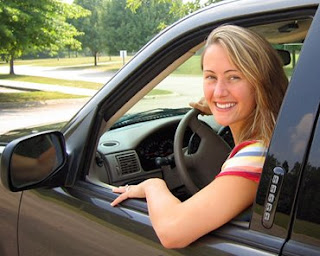
What makes a man below 25 so attractive? Is it the angst to make it big in life? Is it the youthful charm? Is it the fashion sense? Or… is it that shimmering blue car he got?
To have a car is an advantage. You get to travel with not much hassle compared to having to commute. For young men especially that below 25, owning one is a symbol of masculinity. They often use it as a magnet for the opposite sex.
Beneath these fine points, one disadvantage these young men suffer in having a car is: THEY HAVE TO PAY HIGHER AUTO INSURANCE RATE. As the rationale of this policy tells, younger men are at high risks compared to older ones. That is why they have to pay for higher rates.
Some understand and realize this point but for many, they think it is a form of “discrimination”.
The word discrimination is defined as-treatment or consideration based on class or category rather than individual merit; partiality or prejudice: racial discrimination; discrimination against foreigners.
Most young men who claim that indeed there is discrimination feels that though they are at high risks, why must charges be different? It is like charging one person according to gender, race or age which is a form of discrimination.
There is a difference between legal discrimination and the one which is defined by the dictionary. Legal discrimination often pertains to justified discrimination. Discriminating auto insurance rates through age is not true to all states. In some places like California, they categorize them through driving experience. Charges are higher to those who have been driving for less than 9-10 years than those who have been driving more than 10 years to fifty years. For those who are 80 years old or more or the senior citizens have to pay more because they are also at high risks.
In the United States of America, principles which are not prohibited by laws are considered to be permitted. This makes charging bigger rates of auto insurance to men below 25 neither legally discriminatory nor illegal.
Complaints like auto insurance must be based in the drivers’ records whether he drives well or not and not by age. Complainants think that it is unjust to charge everybody for the mistake of half. The basis of charging higher to men 25 and below is the psychological aspect, at this age they become playful, very adventurous, risk-takers and they drink a lot!
DISCRIMINATION strikes you when you only let somebody do so.
Read More..

Will Your Auto Insurance Weather The Storm?

Friday, July 24, 2009

auto insurance
Severe storms can cause enormous property damage to your home. They can also do the same thing to your car. With storms getting worse, what can you do? Take a look at your insurance policy. "Too often, people don't notice they lack certain types of coverage until they try to make a claim," says Ron Berry, senior vice president of the Council of Better Business Bureaus.
In fact, the number of reported claims for vehicle losses due to severe storms nearly doubled in the first five years of this century, according to ISO's Property Claim Services (PCS) unit, the recognized authority on insured property losses from catastrophes in the United States.
Fortunately, the Insurance Information Institute (I.I.I.), a nonprofit organization, says comprehensive coverage will reimburse you for loss due to fire, falling objects, storms, vandalism, animals and floods.
Comprehensive insurance usually has a $100 to $300 deductible, though you may want a higher one to lower your premium. Comprehensive insurance will reimburse you if your windshield is cracked or shattered.
"But, even if you have comprehensive coverage, it is not always guaranteed to meet your individual needs," says Carolyn Gorman, vice president of the I.I.I. "For example, you may be surprised to discover that after a storm your auto insurance does not automatically cover the cost of a replacement rental car while your car is in the repair shop or you wait for authorization for a new car."
She added that an individual could pay as much as $1,000 to rent a replacement car. "Rental reimbursement coverage, which is only a couple of dollars a month, covers the cost of a rental car while your car is being repaired or you are waiting for authorization for a new car. Renting a car for one day can cost more than one full year's coverage for rental reimbursement," Gorman said.
If your car is ever damaged in a storm:
• Know what your insurance covers. Don't wait to find out it doesn't include comprehensive or won't cover emergency roadside assistance or a rental car.
• Report damage as soon as possible. If your car is not drivable, your agent or claims center may be able to save you time and money by having it towed directly to the repair facility and providing you with a replacement rental car.
• Know your deductible and any other additional charges before authorizing work. Expect your insurance adjuster, claims representative or repair facility appraiser to review the damage with you and explain the process, including the use of original or generic auto parts.
Read More..

Car Insurance Are You Getting the Best Deal?

Sunday, June 7, 2009

auto insuranceGetting car insurance can be quite a difficult task. There are just so many insurance companies out there that are desperate to get your business that choosing between the good deals and the dubious deals can be daunting. But since taking out insurance is such a crucial and important thing to do, you have to wonder if getting the cheapest insurance you can afford would be the best idea.
Because of the fierce competition in the insurance market, premiums have been falling, which is good news for those shopping for car insurance. It is prudent to bear in mind however that price is not the most important part of your car insurance deal!
What you should look to achieve is lower premium payments in order to ease the burden of paying insurance. This can take a great deal of time especially when it comes to comparing the different insurance companies and what they might offer. However there are a number of things you can do to improve your chances of success.
Shop around. Each insurance company offers different setups – sometimes differing so drastically that attention to detail is a must. You can ask for quotations from these companies so that you can compare them with regards to the prices and packages they offer. An easier step would be to visit websites that list insurance companies offering affordable insurance packages.
Keep a good clean driving record. If you can show that you are a good driver then insurance companies will consider you a low-risk candidate, and thus will have lower accompanying premium rates
One great way to lower car insurance premiums is by installing a number of additional safety devices or features in your car. Some insurance companies will automatically lower premiums if they see anti-theft devices, automatic seatbelts and airbags.
Creative mathematics can also bring your car premiums down. Ask for higher deductibles on your car insurance policy. By increasing your deductibles you can lower your premiums from between 15 to 20 per cent. Just make sure that you can shoulder the difference!
If you own a second hand car or an old model car, ask to reduce its coverage. A car whose cost is equivalent to less than ten times the premium that you pay for a comprehensive coverage is not a good deal.
You can actually ask for more discounts from insurance companies. A number of discounts can be requested like lower rates if the car has a low annual mileage. There are also companies that grant discounts if you show proof that you have taken a defensive driving course. Passing an advanced driving test can also be used to ask for a discount.
Your profession can actually give you a better deal than you think. Ask around if your particular profession can be considered as a low-risk group. Insurance companies have a list of professions that are grouped between low risk and high risk. Low insurance risk professions are awarded with lower insurance premiums.
Read More..

Car Insurance: It's Getting Increasingly Expensive When You're Elderly.

Sunday, May 24, 2009

auto insuranceThere were 550 serious accidents last year where the driver was over aged 70 and where driver was either killed or badly hurt, reports the Institute of Advanced Motoring . That statistic represents 8% of the national total of 7,035 similar accidents. That means that the over 70's's have more, very serious accidents per mile than any other sector of the population. This view is supported by the Association of British Insurers whose research shows that drivers aged over 70 are 13% more likely claim on their insurance than the drivers aged between 40 and 50.
As the number of elderly drivers will double during the next ten years, this represents a problem for elderly drivers and their families - not to mention the insurance industry, police and indeed all of the emergency services!
You can probably predict the response from the insurance industry. Many insurance companies already reckon that drivers over 80 are as high a risk as the under 25's - and charge premiums to match! Some are even progressively loading premiums once the driver reaches 60. Then at 70, you'll find that many insurance simply refuse to offer cover. Norwich Union and Esure won't quote after 70 and by the time the driver reaches 80, the field narrows to specialised insurers who insure elderly drivers. Help the Aged and Age Concern both market policies that have no upper maximum age. Cornhill only accepts new policyholders up to 84 but if you've been insured by them for a few years, there's no upper age limit. RIAS and Saga are also pleased to consider older drivers.
As the price of car insurance is based on historical claims experience, a 75 year old male driver can expect to pay at least 33% more than if he were aged 50. By the time the driver reaches 80 the premiums hit boy racer levels! So if you're in your early 50's keep smiling at the lowest premiums you'll ever experience – they won't last forever!
And the fairer sex fare even worse. Whilst younger women are renowned for their safe driving, they become more accident-prone as they get older. Whereas male drivers improve with age. (Where have we heard that before!) As a result, elderly women drivers pay the highest rates for car insurance.
It's a biological fact that eyesight and reaction times worsen as age creeps on. And with traffic becoming heavier and road networks ever more complex, elderly drivers can more easily become disorientated and confused. Even a fraction of a second's delay can make the difference between an accident and a near miss. Insurers are reacting by insisting that more elderly drivers take a medical before agreeing to provide insurance. The best advice is to build up a no claims record and as soon as possible and buy No Claims Protection. This protection cost a bit more but it's well worth the money. Then make sure you pay for any small bumps yourself.
But there are some simple steps that older drivers, and indeed all drivers, can take to reduce the likelihood of them having an accident and thereby making themselves more insurable. It's often more about those little things and being alert to likely problems. For example, car parks are a breeding ground for small accidents. Knowing that take more care. Before you get back into your car, walk round it to see how much room you've got. Then edge out carefully making sure that other drivers in the car park aren't driving into the area you're moving into. Then, if advancing years has stiffened you neck and all-round visibility is a bit more difficult, take special care at junctions and when reversing. Remember to move you head and swivel your shoulders - that way you'll increase your sweep of vision.
Many of the policies for older motorists contain special provisions designed to assist them. On Saga's policy for example, ex company car drivers can use any no claims record they'd built up and if a couple are insured and the main driver decides to quit driving, then the spouse can take over the no claims record. Other policies also provide full insurance cover for anyone who takes over driving in an emergency. Cornhill will even payout £250 if the DVLA stops you from driving for health isues associated with age.
In moves to diminish the numbers of accidents involving the elderly, the UK Government is investigating the issue of deteriorating health amongst elderly drivers. It seems to be considering the idea of obligatory health checks for elderly motorists. At the same time some local councils are introducing initiatives of their own. Torbay council has launched a scheme to encourage families and GP's to take more responsibility for encouraging elderly drivers who are not really fit drive, to give up. A road safety spokesperson for Torbay council said, ”The problem is that the elderly can't always see themselves when it's really time to give up driving so those closest to them must take responsibility for that.”
In the meantime, a survey carried out by the Institute of Advanced Motorists confirms that older motorists are aware that they represent an increased accident risk. Seven out of ten older drivers surveyed said they would like to take a refresher course for motorway driving skills and six out of ten wanted to improve their performance at junctions and on unlit roads. In response to these issues, the Institute has extended its advanced tests to older non-members to encourage them to improve and build up confidence. The tests also help spot any serious problems that should encourage the driver pack up driving.
Read More..

Car Insurance. Bad Eyesight Threatens Your Insurance Cover.

Friday, May 22, 2009

auto insuranceIf you have an accident and it’s found that you’d failed to keep your car roadworthy, for example excessively worn tyres, and that was a contributory factor in the accident, your insurer will probably refuse to pay up. And the police may also show an interest too! Quite reasonable many of you will say. But what if it’s you that’s un-roadworthy?
How many driving accidents are accompanied by the comment “I didn’t see the other vehicle”? And what happens if the problem was your eyesight? Has it deteriorated to a dangerous extent?
Well all of us clearly know if we have an eyesight problem but there are opticians to help on every high street. Remember, if you need contact lenses or glasses for driving then you must wear them and if your eyesight deteriorates you should get a new prescription. It’s the legal responsibility of all drivers to ensure that they’re safe to drive.
Only last week I drew up alongside an elderly driver who was clearly having trouble reading the junction signs. He was leaning forward trying to read the signs indicating towards Leeds and rolling forward at 10 mph – all this at traffic lights that by this time had turned red – and he clearly hadn’t seen those! He was lucky that the cars coming across from the right saw him early. I’m not even sure he saw them either!
The law is quite straightforward – it states that any driving licence holder who cannot meet the minimum level of eyesight must not drive. They are also required to surrender their licence.
The eyesight test for drivers’ states that you must be able to read a number plate containing letters and figures 50 mm wide and 79mm high (that’s a legal number plate) from a distance of 20 meters. But you can use your driving glasses.
Having said that there’s no legal obligation for you to have regular eyesight tests but you are required to tell the DVLA if you develop any medical problem that affects your fitness to drive. If you don’t tell them, it’s a criminal offence.
In some American states drivers have to take an eye test every five years but not in the UK. Here, driver aged 70 and over must complete a medical form every three years confirming their fitness to drive and the definition of “fitness” includes eyesight. If theses drivers fail to send in their medical form, they lose their driving licence. (I wonder what that elderly gentleman at the traffic lights said on his?)
On the insurance front, if you are involved in an accident where your defective eyesight was a contributory factor, your insurance company may well argue that you were negligent and refuse to pay out. This could be simply because you needed glasses to drive but weren’t wearing them at the time.
So drive carefully, and keep your eyes peeled – elderly gentleman in Leeds please take note!
Read More..

The Ways to Save Big on Auto Insurance

Saturday, April 18, 2009

auto insuranceAuto insurance can make a big hole in your pocket. Insurance premiums vary hugely between companies, agencies or agents, brokers, and of course the make of the car you own and your credit rating. To pay lower insurance you must:
1. Always maintain a good driving record.
2. Never accept the first estimate you receive. Be wise and check comparisons of different insurance providers at your state insurance department website or phone them. Their addresses and contact numbers can be accessed from consumer action website. Be sure to get competitive quotes from different insurance providers. Contact providers that are strongly recommended by people you know well. Keep your peace of mind by checking the financial stability of the companies with rating companies like A.M. Best well as in forums and blogs.
3. Complete a market survey well before you select a car make and make a comparative table of insurance and other hidden costs. Find out which features increase insurance premiums and which ones reduce premiums. For example if parts of a certain make are hard to find or expensive such cars will have huge insurance premiums, similarly installation of anti-theft devices or an extra brake system lowers insurance premiums. Many questions are answered by the Insurance Institute for Highway Safety.
4. Choose to have higher deductibles this will reduce the burden by at least 15-25%. But look at your finances first and determine whether you can set aside US$ 200-US$1000 periodically to create an emergency vehicle fund.
5. Consider availing the insurance from the same company that has you covered for home, accident, or life. Many companies offer concessions to clients who have more than one kind of policy. Known as a multi-policy discount this could benefit you.
6. Most policies are based on your personal credit record. Having an unshakeable credit history can lower costs. Pay bills on time, don’t avail too many loans, and be sure that credit balances are as low as possible.
7. Avoid duplicating medical coverage. Find out whether eliminating medical cover in auto insurance will reduce your premiums or the personal injury protection costs. In some places the reduction is as much as 40%. So, if you have adequate health insurance you could weigh the pros and cons of eliminating this in auto insurance.
8. Find out if insurance premiums are dependant on where you stay. Sometimes staying in a rural community or suburbs as against the city center could save you a bundle.
9. Take advantages of discounts like low risk career, low mileage, taking public transport to work, car pooling, no violations or accidents, taking defensive driving courses, following safety rules and regulations, or having a child who studies far away.
10. Use the reductions offered for insuring more than one car belonging to the family. Many companies have special offers for corporate organizations, club members, professional groups, alumni groups, or clubs.
Make time to make a big saving. Check through all the parameters and mark areas where a saving can be made. The market is competitive and you can be the beneficiary.
Read More..